Advanced Entity Mapping: Using Schema to Define Relationships
Move from keywords to entities. Learn how to use @id, knowsAbout, and sameAs schema to build a dominant knowledge graph for your brand in 2026.
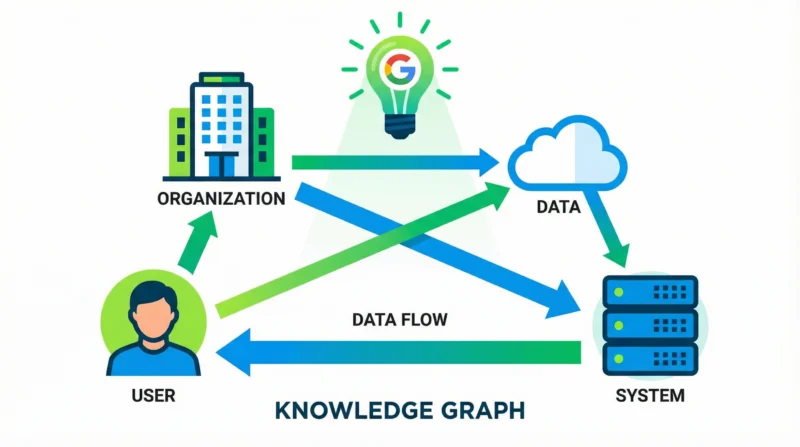
The search landscape of 2026 is no longer a collection of keywords; it is a Knowledge Graph. When Google or an AI assistant looks at your blog, it is trying to answer one fundamental question: "Who is this entity, what do they know, and how are they connected to the rest of the world?"
At RankLogic, we utilize Advanced Entity Mapping. This is the process of using structured data (Schema) to build a machine-readable map of your brand’s expertise. By explicitly defining the relationships between your authors, your topics, and external authorities, you create a "Semantic Moat" that AI-driven search engines cannot ignore.
1. The Power of @id: Creating a Unique Identifier
In 2026, the most critical part of your Schema is the @id (also known as a URI). Without a unique ID, every time you mention "RankLogic" or an author’s name, the search engine has to "guess" if it’s the same entity it saw on a different page.
-
The Logic: An
@idacts like a digital social security number. By assigning a persistent URL (e.g.,https://ranklogic.com/#organization) to your brand, you allow every page on your site to point back to one central, authoritative node. -
The Result: This prevents "Entity Fragmentation," ensuring that all the authority earned by individual blog posts aggregates into your main domain.
2. knowsAbout: Signaling Topic Authority for E-E-A-T
Experience and Expertise (the first two 'Es' of E-E-A-T) are often buried in prose. In 2026, we use the knowsAbout property within Person and Organization schema to lift that expertise into the machine layer.
Instead of just saying "John Doe is an SEO expert," your Schema should look like this (in concept):
-
Subject: John Doe (Person)
-
knowsAbout: Technical SEO, Schema Markup, AI Search Logic.
-
Evidence: Linked to his published case studies and certifications.
This tells the AI agent exactly which "knowledge bins" your brand is qualified to fill, making you much more likely to be cited in specialized AI Overviews.
3. sameAs: The Trust Handshake
In 2026, a website that exists in isolation is a suspicious website. Search engines verify your identity by checking your "External Handshakes."
The sameAs property allows you to link your site’s entities to verified third-party records. This should include:
-
Wikipedia or Wikidata entries (the gold standard of entity verification).
-
Official Social Profiles (LinkedIn, X, YouTube).
-
Industry Registries (Crunchbase, official government business filings).
When Google see that your site's @id is sameAs a verified LinkedIn profile and a Crunchbase listing, its "Trust Score" for your content skyrocketing.
4. mainEntityOfPage: Disambiguating the Focus
A common mistake in 2026 is "Schema Clutter"—having too many types of markup on one page. This confuses the crawler.
The mainEntityOfPage property is the "Highlighter" of the web. It tells the search engine: "Among the author info, the related products, and the sidebar, THIS article is the primary entity of this URL." This ensures that the AI correctly attributes the "Rank Signal" to the right content, rather than getting lost in the supporting data.
5. Multi-Layered Nesting: Building a Page-Level Knowledge Graph
Top-tier SEO in 2026 involves Nesting. Instead of three separate blocks of code, you build a single, interconnected tree.
-
You nest the
Person(Author) inside theArticle. -
You nest the
Organization(Publisher) inside theArticle. -
You nest the
FAQPageinside theArticle.
This structure proves that the "Expert" (Person) works for the "Authority" (Organization) to provide "Trustworthy Answers" (FAQ). This is the technical manifestation of E-E-A-T.
6. Measuring Entity Salience
In 2026, we don't just track "Rankings"; we track Salience. This is a measure of how "central" your brand is to a specific topic. By using advanced Schema, you increase your salience score. When a user asks an AI about "SEO Logic," you want the AI’s internal map to show a direct, thick line connecting that topic to "RankLogic."
Conclusion: Speak the Language of the Graph
The web of 2026 is no longer a library of books; it is a network of ideas. At RankLogic, we believe that the websites that succeed are the ones that provide the "Map" alongside the "Content."
By mastering @id, knowsAbout, and sameAs, you stop being just another blog and start being a permanent node in the global knowledge graph.
Soufiane Daifallah
CEO RankLogic
Soufiane is a Senior Technical SEO Strategist and founder of RankLogic. With over 5 years of experience, they specialize in AI search patterns, entity mapping, and technical architecture. Soufiane is dedicated to helping brands build sustainable authority through data-driven logic and verified E-E-A-T strategies.
Popular Tools
Recent Posts