SEO for AI Agents: Preparing for the Autonomous User
The web is now a service layer for AI. Learn how to optimize for AI agents using llms.txt, DOM clarity, and agent-responsive design.
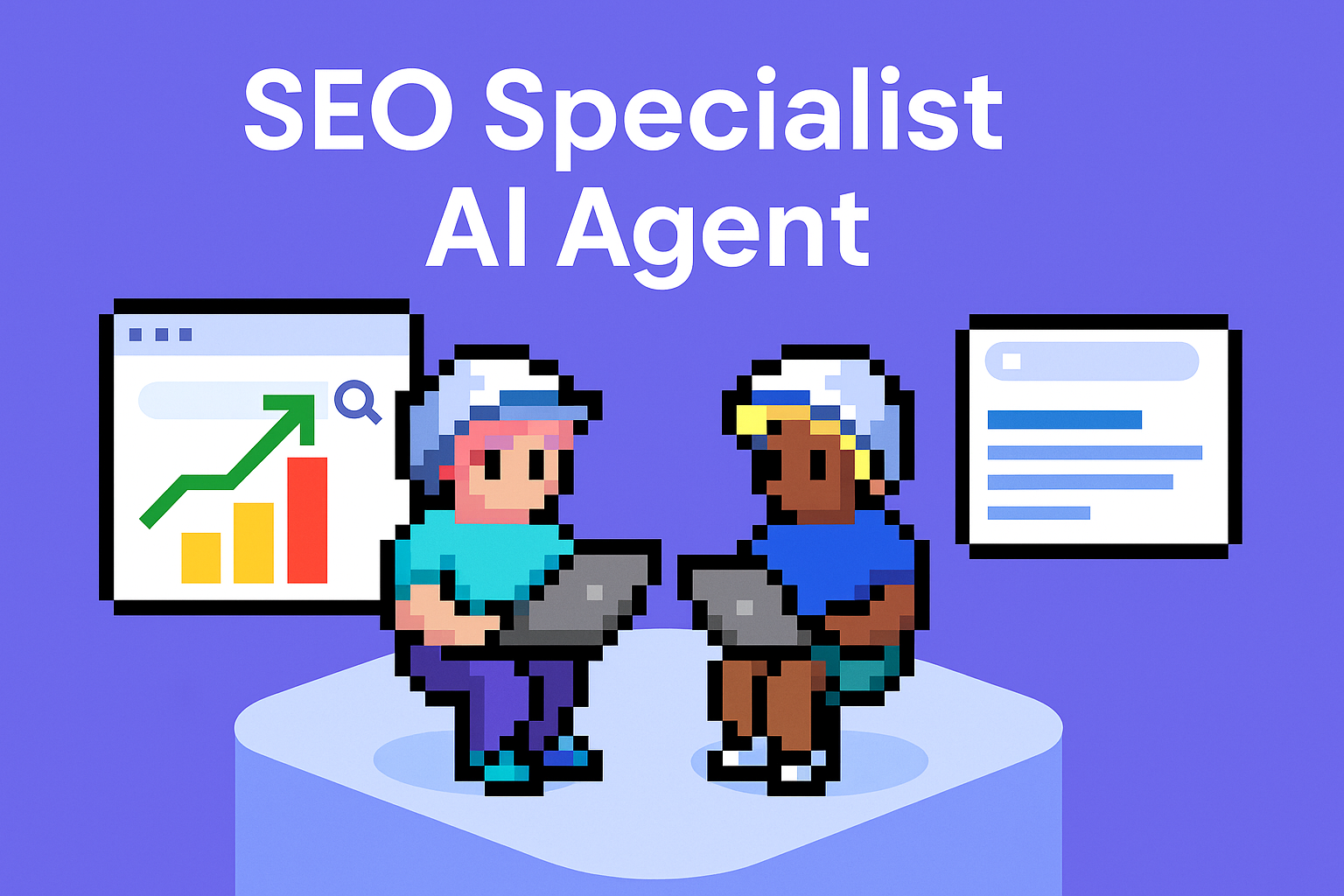
By late 2026, the traditional search-and-click model is being supplemented by Agentic Workflows. Users no longer just "search" for a solution; they deploy AI agents—like specialized versions of Gemini, Claude, or autonomous browser agents—to find, compare, and execute tasks on their behalf.
For RankLogic, this means shifting our focus from "User Experience" (UX) to "Agent Experience" (AX). If an AI agent cannot navigate your site, parse your data, or understand your calls-to-action, you are invisible to the most high-intent segment of the market. Here is the blueprint for the agentic web.
1. The Rise of the llms.txt Standard
Just as robots.txt governed the crawlers of the 2010s, the llms.txt file is becoming the essential handshake for 2026. This is a proposed web standard—a markdown file located in your root directory—specifically designed to give Large Language Models a "cheat sheet" for your site.
-
The Logic: AI agents have "context windows" (limits on how much information they can process at once). If an agent has to crawl 50 pages to understand your services, it may time out or hallucinate.
-
The Strategy: Your
llms.txtshould provide a high-density, markdown-formatted summary of your most important pages, tools, and data points. This allows the agent to ingest your entire "Value Logic" in a single request.
2. DOM Clarity: The "Eyes" of the Agent
An AI agent does not "see" your beautiful CSS transitions or hero images. It sees the Document Object Model (DOM). In 2026, a "pretty" site that is built with messy, non-semantic code is a liability.
To optimize for AX, you must adhere to "Machine-Readable" code standards:
-
Standard HTML Elements: Use
<button>for buttons and<a>for links. Avoid using<div>or<span>with click-listeners. If a machine cannot identify a button's function through its tag, it won't click it. -
ARIA Labels as Navigation Cues: In 2026, ARIA labels are no longer just for accessibility; they are for agent navigation. An
aria-label="Proceed to SEO Audit Checkout"tells the agent exactly what that button does, allowing it to complete a task for the user without human intervention.
3. Programmable Access via OpenAPI and RSS
Direct web scraping is "expensive" for AI agents in terms of compute and time. The most agent-friendly sites in 2026 provide Programmatic Access.
At RankLogic, we recommend maintaining an up-to-date OpenAPI specification or a highly structured RSS/Atom feed. This allows an agent to "query" your site's capabilities directly. If an agent can ask your server for your "latest technical SEO benchmarks" via a structured endpoint rather than scraping a blog post, your site becomes the agent's preferred source of data.
4. Eliminating "Agent Friction"
AI agents are goal-oriented. Anything that interrupts the "Flow to Completion" is a bounce. In 2026, friction-reduction is the highest form of SEO.
-
The Pop-Up Problem: Modals, newsletter pop-ups, and "cookie walls" that require complex human-like interactions (like clicking a small 'X') can trap agents.
-
Guest-First Logic: If your "SEO ROI Calculator" requires a login before it shows a result, an agent will likely move to a competitor’s tool that allows "Guest Access." To capture agentic traffic, you must allow agents to verify your value before demanding a handshake.
5. Content "Atomization" for RAG
Retrieval-Augmented Generation (RAG) is the logic agents use to find answers. They look for "Atoms"—small, self-contained units of information that can be moved from your site into the agent's memory.
To be "RAG-Ready," your content should be:
-
Modular: Use clear H2s that state a problem and paragraphs that immediately provide the solution.
-
Dated and Versioned: Agents prioritize "Freshness." Use
<meta>tags and visible "Last Updated" dates so the agent can verify it is using 2026 data, not 2023 legacy information.
6. The "Identity Handshake" and Trust
In 2027, we anticipate the rise of Autonomous Commerce, where agents will have "wallets" to purchase services. To prepare, your site must have clear, machine-verifiable trust signals.
-
Verified Schema: Use
MerchantReturnPolicyandPriceSpecificationschema even for B2B services. -
E-E-A-T for Machines: Link to your "Transparency Report" or "Ethics Policy" in your footer. An agent's primary directive is "Safety"; if it cannot verify your site is safe, it will not recommend you to its human user.
Conclusion: Serving the System
The web of 2026 is no longer just a destination for human eyes; it is a service layer for AI. At RankLogic, we believe that the websites that "talk" to agents as well as they talk to people will own the future of the market.
Don't just build a website. Build an Interface that the autonomous world can use.
Soufiane Daifallah
CEO RankLogic
Soufiane is a Senior Technical SEO Strategist and founder of RankLogic. With over 5 years of experience, they specialize in AI search patterns, entity mapping, and technical architecture. Soufiane is dedicated to helping brands build sustainable authority through data-driven logic and verified E-E-A-T strategies.
Popular Tools
Recent Posts