Generative Engine Optimization (GEO): Ranking in AI Overviews
Master GEO in 2026. Learn how to use Atomic Answers, Information Gain, and Factual Density to rank in Google AI Overviews and SearchGPT citations.

As we move through 2026, the definition of "the top of the page" has fundamentally changed. Traditional blue links are no longer the primary destination for users; instead, AI Overviews (in Google) and synthesized answers (in platforms like SearchGPT and Perplexity) capture the lion's share of attention. To stay relevant, RankLogic has pivoted from traditional SEO to Generative Engine Optimization (GEO).
GEO is the technical and creative practice of making your content the preferred "source of truth" for Large Language Models (LLMs). When an AI summarizes a topic, it doesn't choose the site with the most keywords; it chooses the site with the most citable logic. Here is how to optimize for the generative era.
1. The "Atomic Answer" Framework
AI engines are designed to retrieve and synthesize facts. If your content is buried in a 3,000-word "ultimate guide" without clear markers, the AI may skip you in favor of a competitor who provides a concise "Atomic Answer."
-
The Logic: Every major heading (H2 or H3) should be followed immediately by a 40–60 word direct response.
-
The Strategy: This "Answer-First" structure allows the AI's retrieval-augmented generation (RAG) system to easily extract your insight as a standalone citation. Think of it as providing the "TL;DR" for the machine before you provide the details for the human.
2. Information Gain: Moving Beyond the Echo Chamber
In 2026, AI models are trained on the existing web. If your blog post simply repeats what is already in the training data, you provide zero "Information Gain." AI search engines prioritize sources that offer unique data, personal experience, or new perspectives.
To rank in AI Overviews, you must include:
-
Original Research: Proprietary data or surveys conducted by your brand.
-
Case Studies: "We tested [X] and the result was [Y]."
-
Contrarian Insights: Challenging the status quo with logical evidence. AI engines cite these to provide a "balanced" overview of a topic.
3. Factual Density and "Claim-Based" Writing
Vague, flowery language is the enemy of GEO. AI systems look for verifiable claims. At RankLogic, we advise a shift toward "Factual Density"—increasing the number of specific data points and named entities per paragraph.
Instead of writing "Our tool is very fast," write "Our audit tool processes 5,000 URLs per minute, which is 30% faster than the 2025 industry average." The second sentence contains three distinct entities (tool, URL, industry average) and two data points (5,000, 30%), making it highly attractive for an AI looking to substantiate its summary.
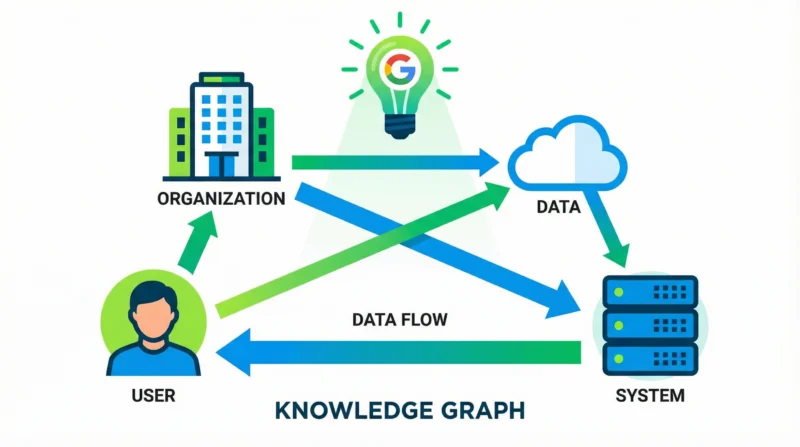
4. Semantic Connectivity and Topic Clusters
AI models understand the world through relationships. If you write about "Core Web Vitals," the AI expects to see references to "Largest Contentful Paint," "Cumulative Layout Shift," and "Interaction to Next Paint."
By using Topic Clusters, you prove your authority across the entire semantic map. If your site has twenty interconnected posts about every facet of site speed, the AI views you as a "subject matter expert entity." When a user asks a complex question about speed, the AI is more likely to cite your domain because your internal linking proves you have the depth to back up the claim.
5. Technical Machine-Readability
GEO requires a flawless technical foundation. If an AI crawler (like GPTBot or Googlebot) encounters a wall of unoptimized JavaScript or a chaotic heading structure, it will fail to "ingest" your facts.
-
Semantic HTML: Use
<article>,<section>, and<footer>tags to define the hierarchy of your information. -
JSON-LD Verification: Ensure your Schema Markup is not just present, but nested and error-free. This acts as the "metadata layer" that confirms your claims to the AI.
Conclusion: From Clicks to Citations
In the generative era, the Citation is the new backlink. Being the named source in an AI Overview provides a level of brand authority that a traditional ranking cannot match. At RankLogic, we believe that the future belongs to those who provide the most "digestible" expertise.
Optimize for the machine’s need for facts, and you will win the human’s need for answers.
Soufiane Daifallah
CEO RankLogic
Soufiane is a Senior Technical SEO Strategist and founder of RankLogic. With over 5 years of experience, they specialize in AI search patterns, entity mapping, and technical architecture. Soufiane is dedicated to helping brands build sustainable authority through data-driven logic and verified E-E-A-T strategies.
Popular Tools
Recent Posts